PCOS and Mental Health: The Hidden Emotional Struggles Women Quietly Endure
There are certain struggles that people can see immediately, and then there are the ones hidden beneath forced smiles, filtered pictures, and “I’m fine” responses. For many women living with Polycystic Ovary Syndrome (PCOS), the emotional weight often becomes heavier than the physical symptoms themselves. While conversations around PCOS frequently focus on irregular periods, weight gain, acne, or fertility challenges, the impact on mental health and emotional well-being is still not discussed enough.
Yet for countless women, PCOS is not simply a hormonal condition. It is an emotional experience. One that quietly affects confidence, relationships, self-image, and even identity.
Living with PCOS can feel exhausting because the condition often influences nearly every aspect of daily life. The body changes in ways that may feel unfamiliar or difficult to control. Mood swings become unpredictable. Anxiety begins to settle into ordinary routines. Over time, the emotional burden grows silently, especially when people around them fail to understand how deeply PCOS can affect mental well-being.
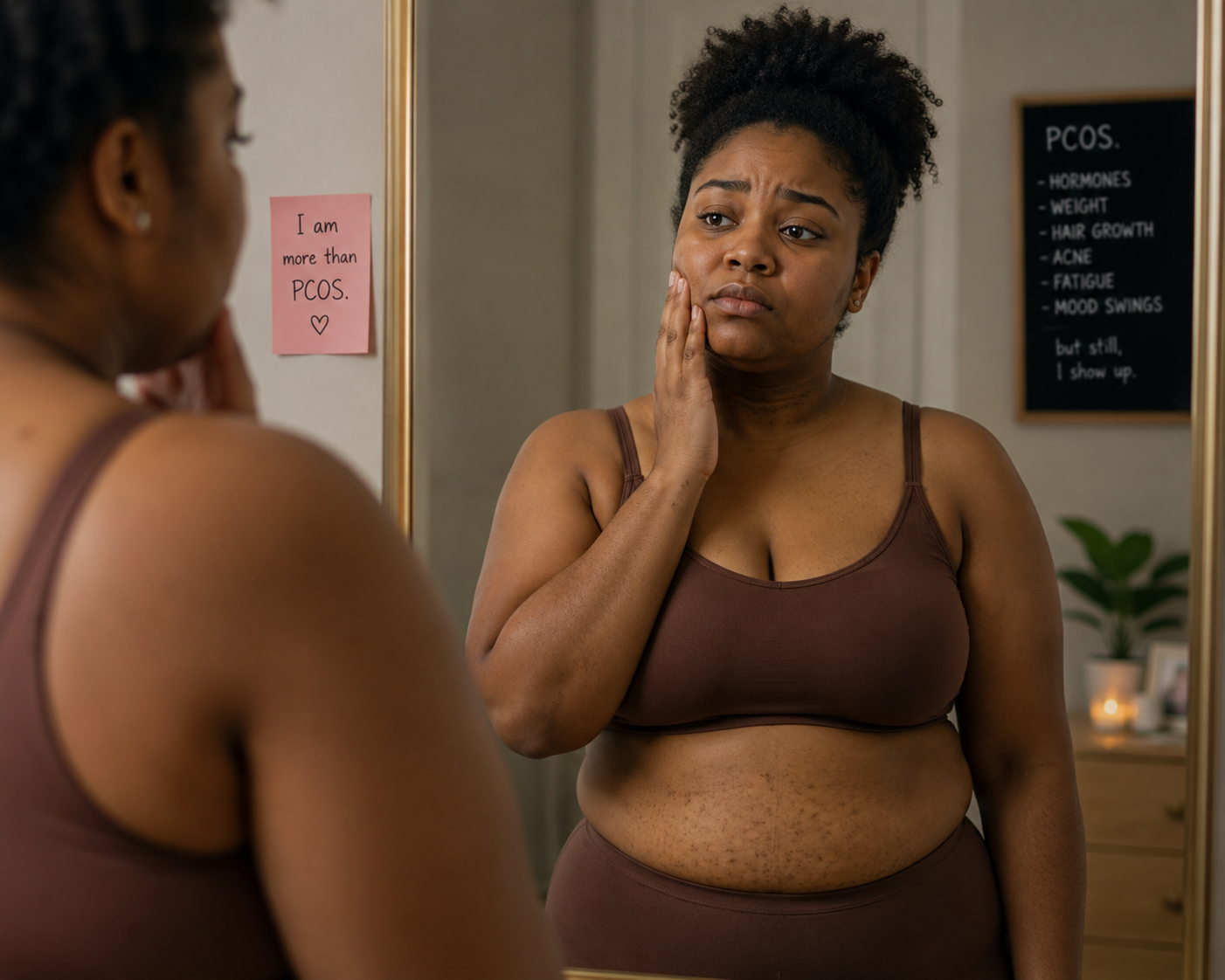
One of the hardest parts of PCOS is how invisible the emotional struggle can be. A woman may appear functional on the outside while privately dealing with frustration, insecurity, emotional fatigue, or hopelessness. Many women spend years feeling disconnected from their own bodies because nothing seems to respond normally. Weight fluctuates despite effort. Skin problems persist despite treatment. Hair thinning or excessive facial hair begins affecting confidence. Menstrual cycles become unpredictable. These experiences may seem physical on the surface, but emotionally, they can slowly chip away at self-esteem.
The connection between PCOS and mental health is strongly linked to hormones. Hormonal imbalances can affect mood regulation, stress responses, and emotional stability. This explains why many women with PCOS experience anxiety, depression, irritability, emotional burnout, or feelings of isolation. Unfortunately, because these emotional symptoms are often overlooked, many women begin blaming themselves instead of recognizing that their mental exhaustion may also be connected to their condition.
Body image struggles are another major emotional challenge associated with PCOS. Society already places unrealistic expectations on women’s appearance, and PCOS can intensify the pressure to look a certain way. When someone feels like their body is constantly changing against their will, insecurity can become deeply rooted. Social media comparisons only make this worse. Seeing curated versions of beauty while privately battling hormonal acne, bloating, weight changes, or hair growth can leave many women feeling emotionally defeated.
Over time, this emotional strain can affect relationships too. Some women begin withdrawing socially because they no longer feel confident in themselves. Others struggle with intimacy because they feel disconnected from their bodies. Fertility concerns may also create emotional stress, especially for women who dream of motherhood but constantly worry about complications or uncertainty surrounding conception.
What makes this even more difficult is the lack of emotional support many women receive after diagnosis. Some are simply told to “lose weight” or “manage stress” without deeper conversations about the emotional toll PCOS carries. Others spend years undiagnosed, feeling confused about symptoms they cannot explain. When people around them minimize their experience, it can create feelings of loneliness and emotional invalidation.
Mental well-being with PCOS requires more than treating physical symptoms alone. It involves creating space for emotional healing too. Women with PCOS need support systems that acknowledge both the hormonal and psychological aspects of the condition. Emotional care should never be treated as secondary.
Learning to manage PCOS emotionally often begins with self-compassion. Many women unknowingly develop harsh internal criticism because they feel frustrated with their bodies. However, constantly fighting against yourself emotionally only deepens the exhaustion. Healing sometimes starts with understanding that your body is not failing you. It is responding to imbalance, stress, and hormonal disruption in ways that deserve patience rather than punishment.
Lifestyle adjustments can also positively influence emotional well-being. Gentle exercise, balanced nutrition, proper sleep, and stress management can help regulate hormones while improving mood stability. However, it is important to approach wellness from a place of care instead of punishment. Many women with PCOS become trapped in cycles of extreme dieting or obsessive routines because they feel desperate for control. Sustainable healing rarely comes from self-hatred.
Therapy and emotional support can also make a significant difference. Speaking openly about anxiety, depression, body image struggles, or emotional burnout helps reduce the isolation many women experience. Sometimes the most healing thing is realizing you are not alone in what you are feeling.
There is also power in education. Understanding how PCOS affects the brain, hormones, and emotions helps women stop internalizing blame. Mental health symptoms linked to PCOS are real. Emotional exhaustion linked to hormonal imbalance is real. The frustration, sadness, anxiety, and emotional confusion are valid experiences, not signs of weakness. At the same time, conversations about PCOS need to become more compassionate socially. Too often, women are expected to quietly carry hormonal conditions without emotional acknowledgment. But living with PCOS can be mentally draining in ways people
Featured Image Credits: Arogi

Temitayo Olawunmi
Temitayo Olawunmi is a clinical psychologist in service to Arogi Trauma Care Foundation. She is solution-focused and result-driven. She has a strong passion for delivering exceptional customer service and ensuring clients satisfaction at every touchpoint.